What caught you?
A color, a small figure, a bloom, a line. Describe it before deciding what it means.
RE-MEMBER who you are.
Reassemble, not recall.
Pause with the image. Let a detail catch your attention. Begin with what you notice—and see where the conversation takes you.
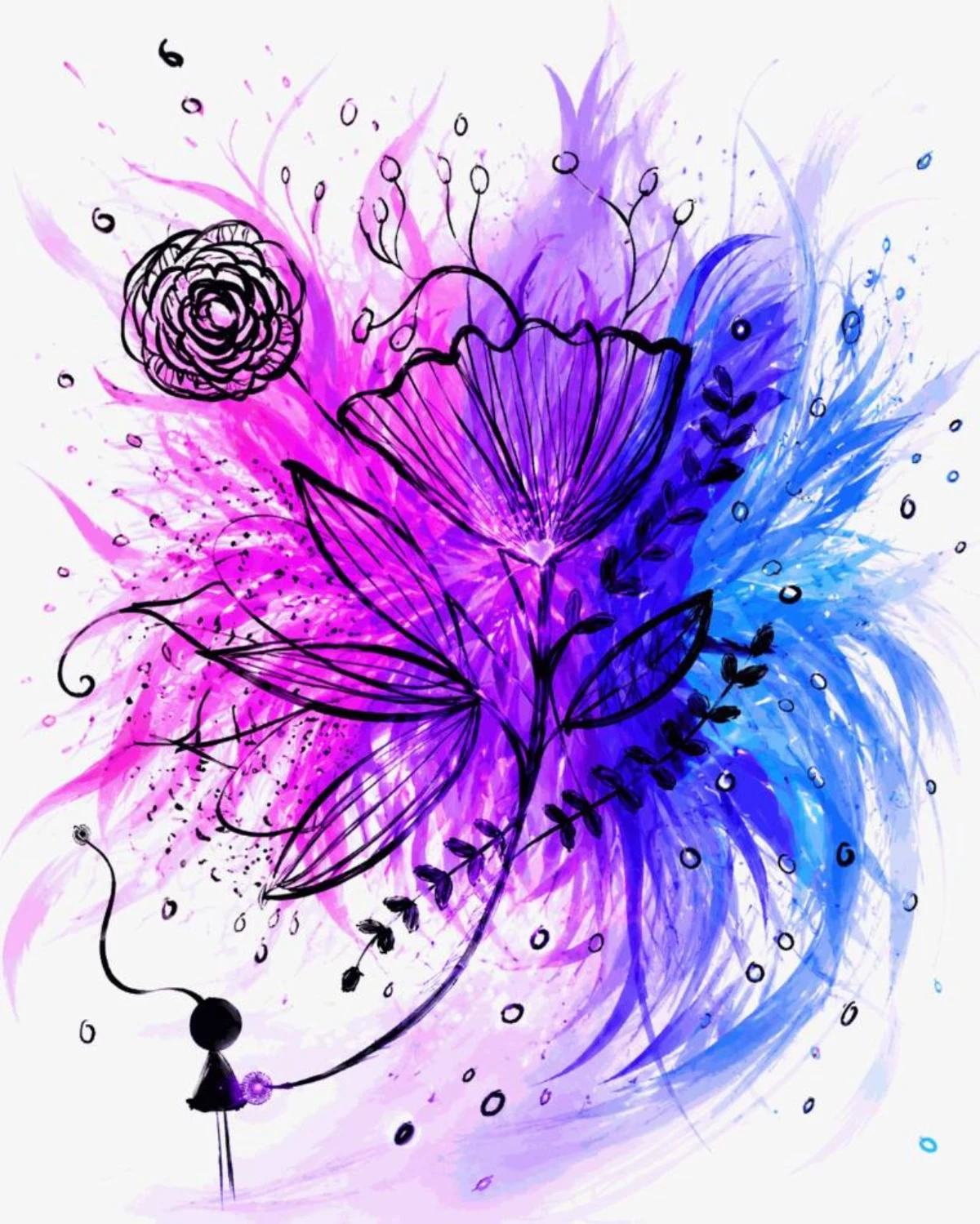
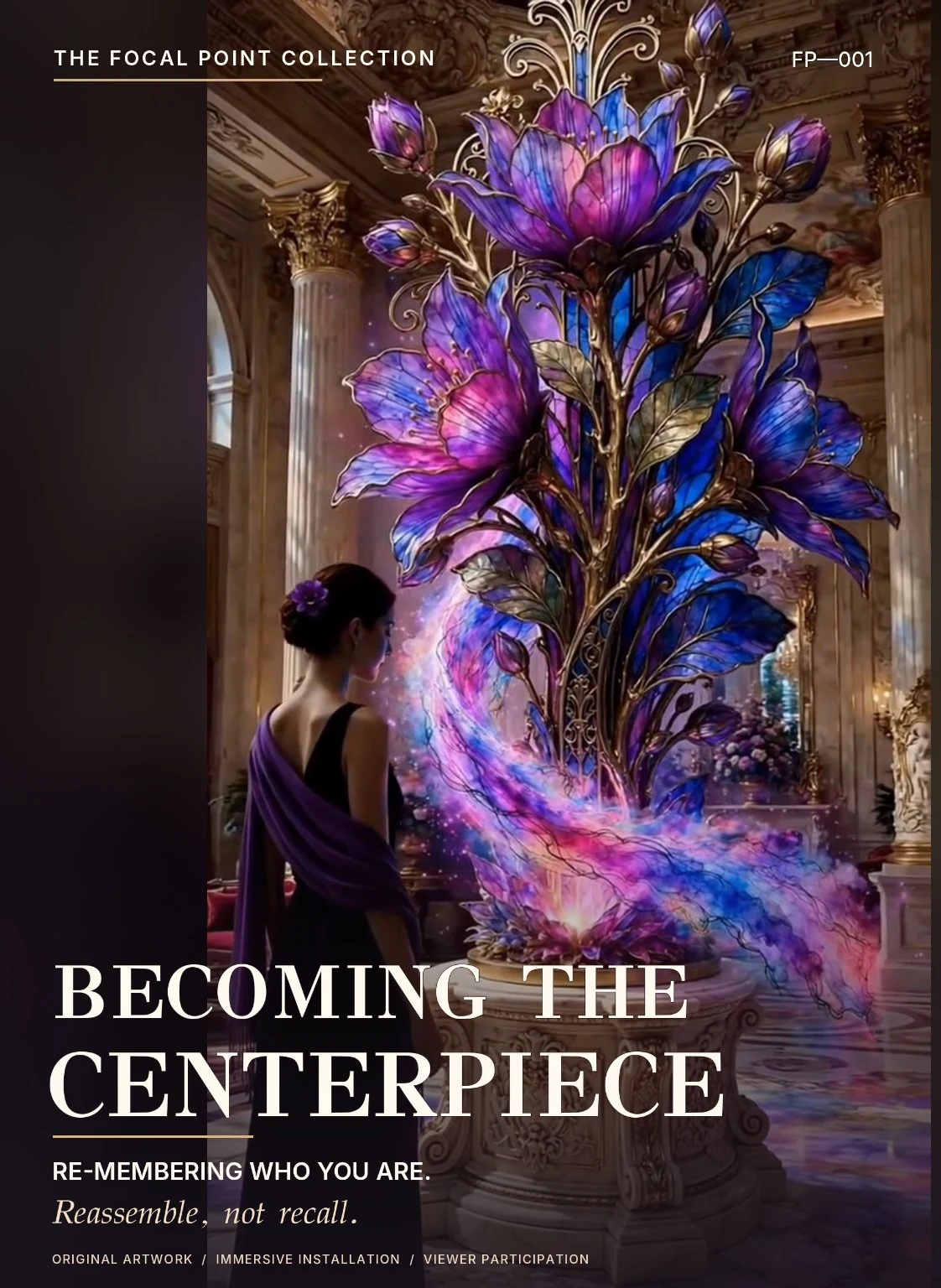
The artwork offers an opening. The Mirror Method carries the encounter forward through conversation, feedback, another attempt, and a choice you can put into practice.
The installation shown is a concept visualization. Physical production, venue, dates, and participation details are still to be developed.
View the two-part concept board ↗A color, a small figure, a bloom, a line. Describe it before deciding what it means.
Name a feeling, a memory, or a question. You can also say, “I’m not sure yet.”
Make one connection to your life. Try saying what you mean, hear it reflected back, and choose one action.
Write, speak aloud, or use this with a partner. Sharing is optional. Your writing stays in the open page; download it before closing if you want to keep it.
This page does not submit or automatically save your responses. You can practice here without providing personal information.
Use these references if they help you explore the experience. You can complete the reflection without either one.
The supplied wheel can help you move from a broad feeling to a more specific word. Choose what fits your experience; mixed feelings are welcome. It does not diagnose a condition or tell you what you must feel.
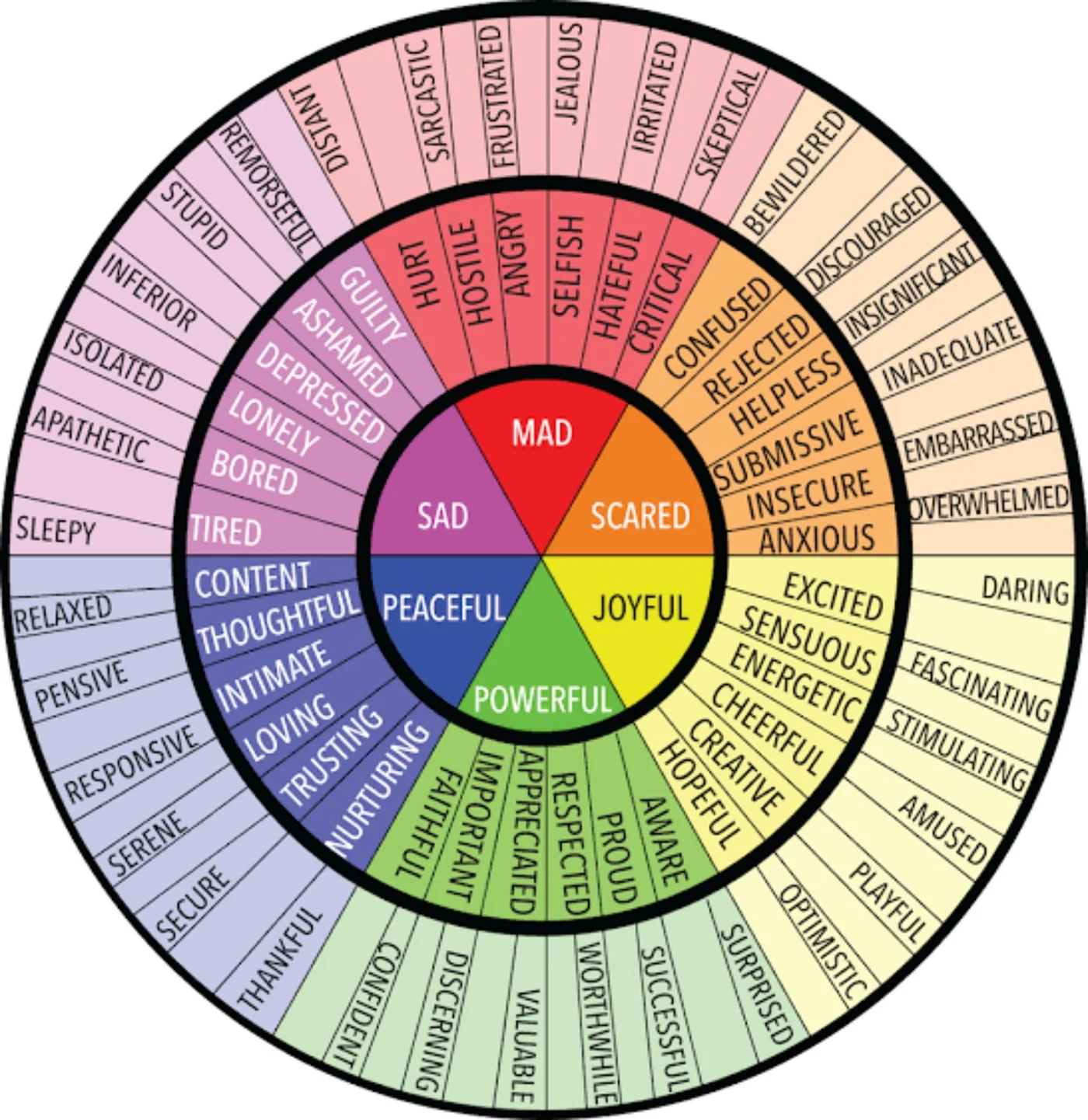
Supplied reference image. The Feeling Wheel’s original model is associated with Gloria Willcox; this image’s specific adaptation is not established here. See the foundations and source notes for the original publication reference.
Open the full-size reference ↗Hawkins’s map is a spiritual framework for interpreting states and perspectives. Here it is a reference for discussion, rather than a measured score of your consciousness, a clinical assessment, or a ranking of your value.
Ask: “Which description speaks to something I am experiencing? What does it help me notice? What does it leave out?” You can experience fear and act with courage at the same time.
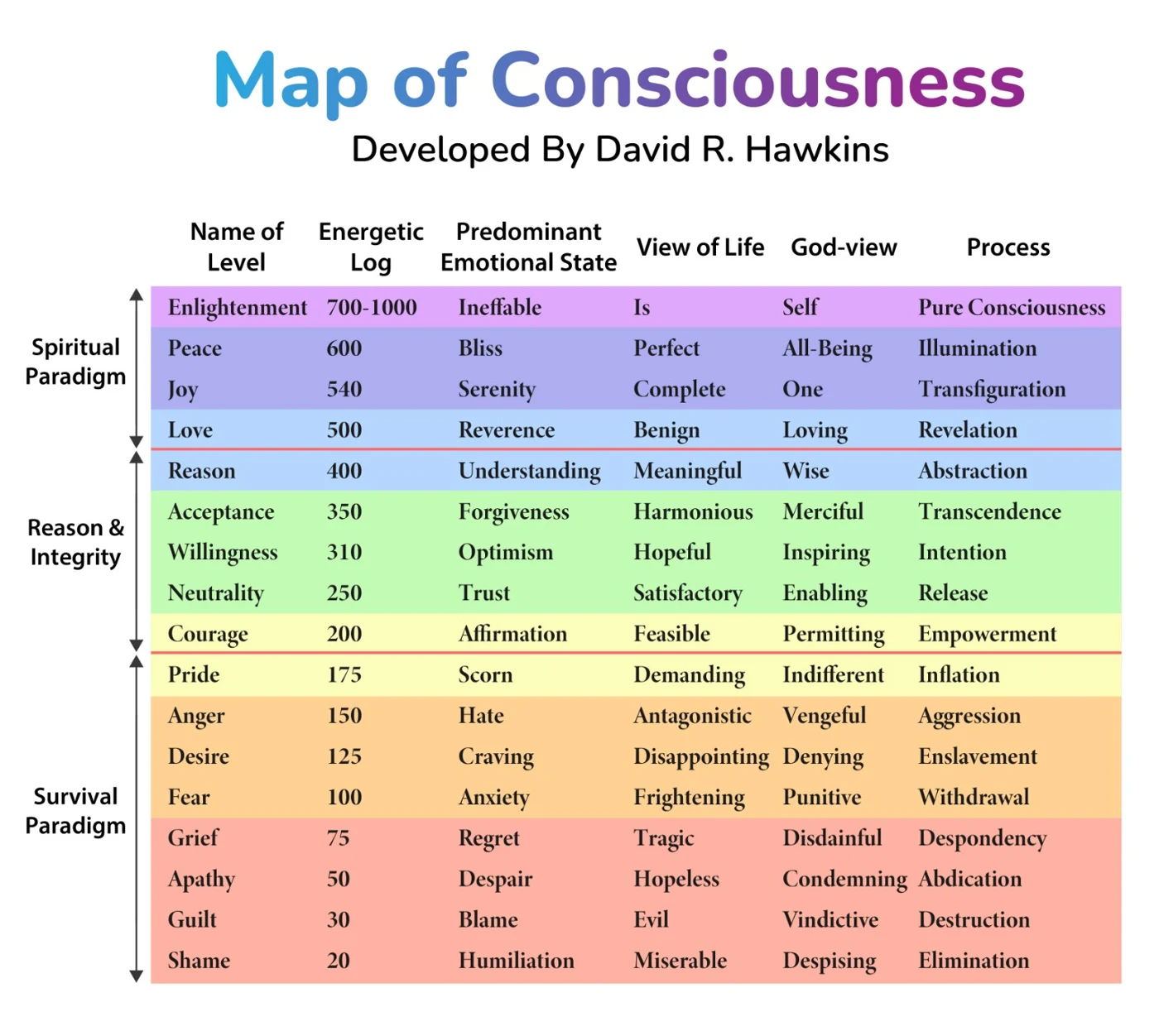
Framework attributed to David R. Hawkins. Supplied chart image. Its numerical values are part of the model, not measurements produced by this website.
Read the framework distinctions & sources ↗Start with the participant’s observation. Ask what the image means to them, reflect their words accurately, and invite them to correct you. Offer one useful question, then let them try explaining again. Keep a participant’s interpretation distinct from the artist’s intention.
Finish with a practical connection: a conversation, a boundary, a routine, or a decision. The goal is a small, observable application the participant chooses.
Continue with the facilitator guide ↗Continue with the workbook, practice lab, and lifestyle tools.